The World's Most Difficult and Dangerous Airports
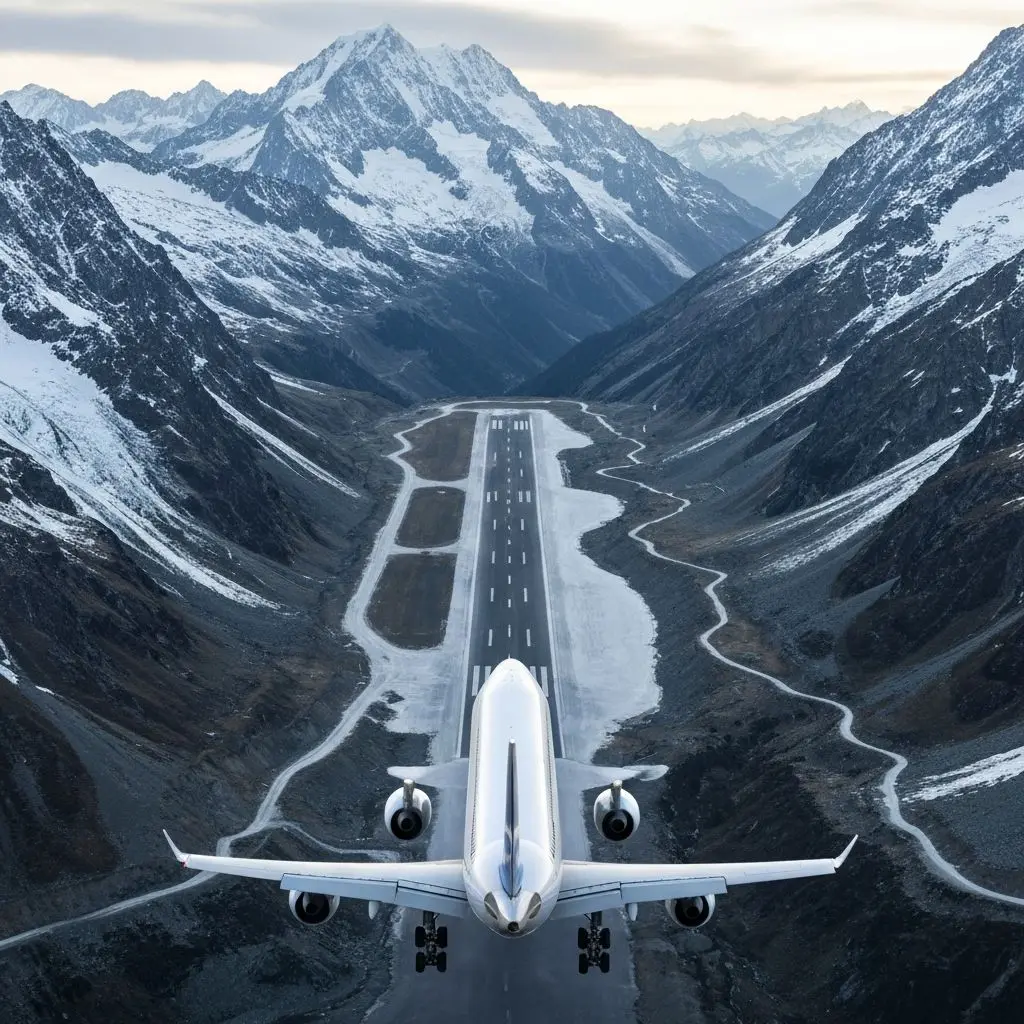
Some airports around the world offer breathtaking views for passengers while presenting serious challenges for pilots. They are often labeled "dangerous" not because of frequent accidents, but due to extraordinary geography, runway design, and weather conditions. In reality, these airports operate under safety standards that are far stricter than average.
What Makes Airports Difficult?
The main factors that make these airports difficult include:
- Short, sloped, or narrow runways - Limiting aircraft options and requiring precise piloting
- Approaches surrounded by mountains, valleys, or dense urban areas - Creating geographical obstacles
- Sudden wind shifts, especially strong crosswinds - Requiring continuous pilot attention
- High altitude and thin air - Affecting aircraft performance
- Flight routes above temporary warzones - Adding navigational complexity
Notable Difficult and Dangerous Airports
Lukla – Tenzing-Hillary Airport (Nepal)
Located in the Himalayas, this airport has a very short and sloped runway. Go-arounds are nearly impossible, and landing decisions must be made within seconds.
Paro Airport (Bhutan)
Surrounded by mountains and narrow valleys. Only a limited number of pilots are certified to land here, and all approaches are flown manually.
Madeira – Cristiano Ronaldo Airport (Portugal)
Strong crosswinds and a runway partially built on platforms over the ocean make landings technically demanding.
Princess Juliana Airport (St. Maarten)
Aircraft fly extremely low over a public beach before landing. Visually intimidating, operationally precise.
Courchevel Altiport (France)
Located in the Alps with a very short, steep runway. Unsuitable for large commercial aircraft, with virtually no margin for error.
Gibraltar Airport
The runway intersects a major city road. Combined with strong winds and a narrow approach, this creates a unique challenge for pilots.
El Alto International Airport – La Paz (Bolivia)
One of the highest international airports in the world. Thin air significantly affects aircraft performance during takeoff and landing.
Aspen–Pitkin County Airport (USA)
Nestled between mountains in a narrow valley, prone to turbulence and rapidly changing wind conditions.
Wellington Airport (New Zealand)
Famous for strong and unpredictable crosswinds, requiring continuous manual control by pilots.
Juancho E. Yrausquin Airport (Saba)
Home to one of the shortest commercial runways in the world, allowing only highly precise landings and takeoffs.
Safety Measures at These Airports
At these airports:
- Only highly trained and specially certified pilots are allowed to operate
- Flights are delayed or canceled immediately when conditions are unsafe
- Operating procedures are far stricter than at standard airports
As the level of difficulty increases, so do safety measures.
What This Means for Passengers
For passengers, landings at these airports may feel tense or even frightening. However, this reaction is usually caused by unfamiliar visuals and sharper maneuvers. In reality, these airports represent some of the most disciplined and carefully managed operations in aviation.
Conclusion
The phrase "the world's most dangerous airports" is often misleading. These airports are not defined by accidents, but by expertise, discipline, and advanced piloting skills. That dramatic landing you see through the window is a reminder of how delicately balanced modern aviation truly is.